
Trendy vs Timeless: Which Pieces Are Actually Worth Buying on Repeat

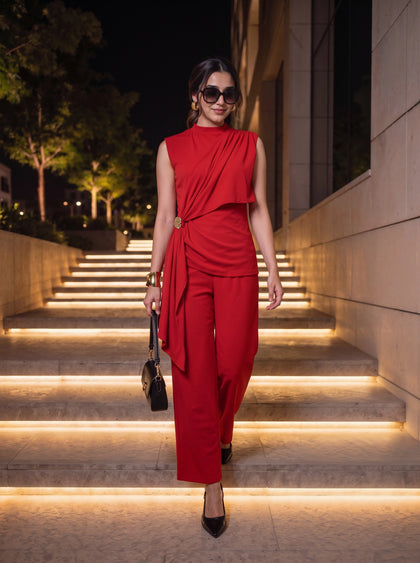
Open Instagram on any given evening and within four scrolls you'll spot the same cherry red co-ord set on three different women, ordered from three different sellers, each one a slightly different shade of “cherry red.” Give it six weeks and that same set sits folded at the bottom of a drawer while a new colour takes over everyone's feed.
If that sounds a little too familiar, you're not alone, and you're definitely not doing anything wrong.
Most of us have a version of this story somewhere in our cupboard. A top that felt essential the moment it showed up in a friend's story, forgettable by the time the tags came off. A dress bought for one wedding that never made it to a second. The problem was never bad taste. Nobody ever taught us to ask the one question that actually matters before hitting buy now: how many times am I actually going to wear this?
That question has a name in the fashion world. Cost per wear. Once you start using it, shopping stops feeling like a gamble and starts feeling like a decision you're actually in control of.
The maths nobody does at checkout
Cost per wear is almost embarrassingly simple. Take what you paid for something, divide it by the number of times you genuinely wear it, and that's its real price. Not the number on the tag. The number attached to how much that piece actually lives in your life.
A well-made basic tends to beat a trendy buy on cost per wear almost every time. Trend pieces are usually tied to one very specific look, which makes them hard to slot into different outfits, while something built to last simply keeps getting worn.
Let's put actual rupees on it.
Say a bright printed blouse catches your eye during a flash sale for 799 rupees. It photographs beautifully, you wear it to two parties and one reunion because the print already feels over after that, and then it just sits. Three wears. That works out to roughly 266 rupees every single time it leaves the cupboard.
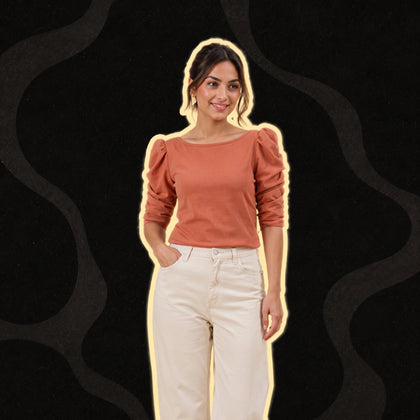
Now take a plain white top with clean sleeves, priced a little higher at 1,199 rupees, the kind you'd throw on with work trousers on a Tuesday, a nice skirt for a friend's engagement lunch, and old blue jeans on a lazy Sunday. Wear it even once every three weeks for two years and the cost per wear drops under 35 rupees. The “expensive” top wins. Not by a little. By a lot.
 White Puff Sleeve Top for Women
Shop this piece
Why Indian closets fill up faster than they empty
Here's the part nobody says out loud. In India, the fear of repeating an outfit is doing more damage to our wardrobes than bad taste ever could. Social media, and the fear of being seen in the same outfit twice, is a real reason India's fast fashion cycle keeps spinning faster, pushing constant new purchases instead of repeat wear.
Add our calendar to that. A cousin's roka one weekend, a colleague's baby shower the next, Diwali at the in-laws, nine straight nights of Navratri garba. The pressure to look different every single time adds up fast, and it adds up in rupees. A closet stuffed with one-occasion outfits, and a mind that still insists there's nothing to wear.
Two things fix this faster than more shopping ever will. One, timeless pieces are meant to be restyled, not retired. Change the dupatta, swap the jewellery, add a jacket, and the same black dress reads completely different at a work dinner than it does at a sangeet. Two, repeating an outfit is quietly turning into its own kind of flex. Plenty of people who once treated a repeat outfit as a small embarrassment now wear the same piece on purpose, styled differently each time, and treat it as proof they know their own style rather than a slip up. If it works for them on camera, it'll work at your cousin's mehendi too.
 Black Wrap V-Neck Midi Dress with Tie-Waist Detail
Shop this piece
Before you add to cart, ask this
A quick way to sort a trend piece from an actual keeper, right there on the checkout screen.
- 01 Would you have wanted this a year ago, and will you still want it a year from now? Timeless pieces don't come with an expiry date attached to a hashtag.
- 02 Can you already picture three outfits with it in your head? If it only works with one specific pair of heels and one specific mood, that's worth noticing before you pay for it.
- 03 Does the colour or print have a moment attached to it, a show, a meme, a festival, or is it a shade you'd reach for regardless of season?
- 04 Is the fit forgiving, or extremely particular? Something that looked stunning on someone else's feed can still be a pain to actually sit, eat, and dance in for six hours straight.
- 05 Would you still want it without a countdown timer, an only two left in stock warning, or a Buy 2 Get 1 banner nudging you along?
This isn't only a western wear rule either. A solid, well cut kurta in a shade you actually love will easily outlast six printed occasion sets that were each bought for one specific function and nothing else.
None of this makes trends the enemy. A wardrobe made only of basics gets boring fast, and honestly, part of the fun of getting dressed is the occasional loud print or the colour everyone's suddenly obsessed with. The idea isn't to swear off trends completely. It's knowing which purchases are your foundation and which ones are your fun money.
 Black Pleated Midi Skirt with Belt
Shop this piece
The shopping problems nobody warns you about
A few things that rarely make it into these guides, even though they probably should.
Buy 2 Get 1 Free is not automatically a win. It's only a win if all three pieces actually earn their place in rotation. Use two of those slots on things you already know you'll reach for weekly, a solid skirt, a plain top, and let the third be your one trend indulgence, instead of three near identical prints you'll each wear once for the same event and then forget.
Buy now, pay later has made it dangerously easy to separate the price from how it actually feels. A dress split across three easy payments feels like it costs a third of what it really does, right up until the second charge shows up on your statement. If you wouldn't buy something in one shot with the full amount in hand, that alone is useful information about how much you actually want it.
Fabric care matters more here than most wardrobe guides ever mention, because Indian weather doesn't forgive lazy laundry habits. A pleated skirt that asks to be ironed only along the pleats, or a top that prefers a gentle hand wash over a rough machine spin, isn't being fussy for no reason. Following that one small instruction on the label is often the difference between a piece surviving two full summers of heat and sweat, and one that loses its shape by August.
And unlike a lot of places where a broken zip means the bin, most of us still have a tailor a couple of lanes away. A hem coming loose, a waist that needs an extra inch, a stuck zip, all of it is usually a small, quick, cheap fix here rather than a reason to give up on something. Before writing a piece off as done, it's worth asking your local tailor first.
Well over seven in ten Indian shoppers already say affordability is one of the biggest factors behind what they buy.
A little bit of this thinking is really just about making that same budget stretch further, not spreading it thinner across things you'll barely wear.
Where a smart trend buy still fits in
If you do want to dip into a trend, a co-ord set is a good place to practice this same logic, just choose it in a solid, wearable colour instead of a print with a shelf life of one season. Worn together with heels for a cocktail evening, it does one job well. Worn as separates, the top with jeans on a weekday, the trousers with a plain shirt for a work call, it does three or four jobs instead of just one. Same purchase, several times the cost per wear, just by treating the hanger as two pieces instead of a single outfit.
 Black Draped Sleeveless Co-Ord Set
Shop this piece
The wardrobe that actually earns its keep
This isn't about buying less just to prove a point, or a lecture on sustainability with a finger wag attached. It's simply about noticing, before the payment goes through, whether a piece is going to earn its place in your week or just its moment on your feed. Buy the trend when it genuinely makes you happy. Just build the rest of your closet around pieces that don't make you think twice before wearing them again next Tuesday, and the Tuesday after that.
The smartest shoppers in India right now aren't necessarily the ones buying the most. They're the ones who've gotten pickier, choosing pieces built around versatility and comfort over pure impulse. It's part of why minimalist, capsule style wardrobes built around a small set of versatile pieces are gaining ground here, fewer things bought, all of them actually worn.
The next time your cart has five tabs open and a countdown clock ticking, do the maths first.
Your wallet will thank you, and eventually, so will your closet.
Found your look? Shop the EverMore edit.
Shop nowKeep reading
-
 Style guide
The Buy 2 Get 1 Free Formula: How to Turn 3 New Pieces Into 9 Outfits
Your cousin's sangeet is four days away and you are standing in front of a wardrobe that is, technically, full. Every hanger is...
-
 Style guide
Which Dress Colours Actually Suit Your Skin Tone: A Guide for Indian Women
Every Indian woman has some version of this memory. You're on a wedding shopping trip, standing in a shop with fifty shades of ...
-
 Style guide
What to Wear to Your College Farewell (If You Don't Want to Wear a Saree)
Somewhere in your class WhatsApp group, someone has already typed "what is everyone wearing for farewell," and by evening there...


