


What to Wear to Your College Farewell (If You Don't Want to Wear a Saree)

Somewhere in your class WhatsApp group, someone has already typed "what is everyone wearing for farewell," and by evening there were sixty replies, most of them about sarees. Your roommate has borrowed her mother's Kanjeevaram. Your best friend has a blouse appointment next Tuesday. And you're sitting there scrolling through all of it, wondering if it's even allowed to not wear one.
It's allowed. Nobody writes it down anywhere, but farewell in most Indian colleges has quietly turned into a saree-only event, the same way weddings turned into a lehenga-only event for guests who'd honestly rather wear something else. "Everyone is doing it" was never really a reason on its own, and more girls than you'd think are walking into their farewell in something other than six yards of fabric and looking completely put together.
This one is for them, and for anyone still on the fence.
It's allowed.
Why the saree became the unofficial rule
No college handbook says girls must wear a saree to farewell. It became the norm because for a lot of students it doubles as a small rite of passage, often the first time they wear a saree at all, taught to drape it the night before by a mother or an aunt. It photographs well on stage, it feels ceremonial, and once one batch does it, the next batch treats it as tradition instead of a choice anyone actually made.
None of that makes it compulsory. It makes it common, which is a different thing. If sarees genuinely make you happy, wear one and enjoy every minute of it, this isn't an argument against them. It's for the girls who feel like they're being pulled toward an outfit they never really wanted, purely because saying no to it feels like more effort than it's worth.
The part nobody actually says out loud
Ask around properly and most of the real reasons don't show up in the group chat. They show up in a one-on-one message to your closest friend, late at night.
Some of it is practical. Not everyone knows how to drape a saree, and learning three days before farewell while also finishing internal assessments is not anyone's idea of a good time. A pallu that won't sit right, pins that don't hold, a drape that starts slipping the moment you sit down, these are actual worries, not vanity. Add up the blouse stitching, a fall and pico, jewellery you have to borrow or rent, maybe even a parlour visit just to get the drape done properly, and a "simple" saree stops being simple on your wallet, especially for an outfit you'll probably wear exactly once.
Some of it is social. There's a quiet fear of standing out for the wrong reason, of photos that live in the class group forever, of a strict senior or a professor noticing. And some of it is just comfort. Farewell means standing through speeches, walking up for the Mr and Miss Farewell moment if your college still does that, sitting through performances, hugging half your batch, and then dancing for a solid hour once the DJ takes over. A saree that isn't pinned properly is a real liability by the time the dance floor opens up.
None of this makes you difficult or dramatic. It makes you someone who'd rather actually be present on the day instead of constantly checking a pallu.
So what actually works instead
The job of a non-saree farewell outfit is straightforward. It needs to look occasion-ready in photos, survive a few hours on your feet and then on the dance floor, and not read as something you settled for. A few categories do this consistently well:
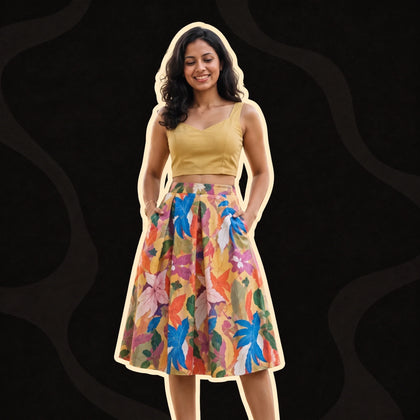
- Co-ord sets, a skirt and top in particular, have become the easiest way to look pulled together without touching a saree. A flared or pleated skirt in a solid festive colour, paired with a fitted or statement top, gives you that same dressed-up, occasion feeling as ethnic wear, minus the draping and minus the pallu anxiety, with a lot more freedom to actually move. It's also, right now, one of the most genuinely trending silhouettes in Indian fashion, not just a farewell workaround.
- Indo-western pieces do a similar job while staying a bit closer to traditional: dhoti pants with a fitted crop top, a cape set, or a palazzo suit with a statement dupatta if you still want a nod to Indian wear without the actual six yards.
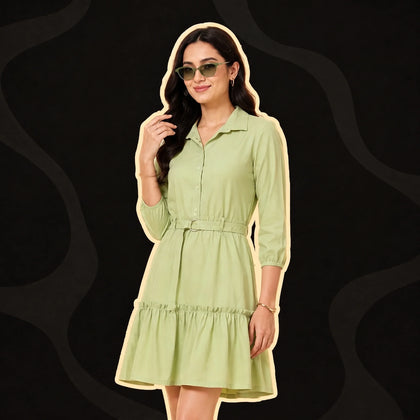
- A well-cut dress, a fit-and-flare or a one-shoulder silhouette especially, works well if your college's farewell has always leaned a little western, or your cultural evenings have never been strictly ethnic anyway.
- A jumpsuit is the most underrated option here, particularly if you already know you'll be dancing hard by evening. One piece, nothing to readjust, and it photographs better on stage than most people expect.
Whichever you pick, treat it as one photo-ready look rather than five separate decisions made under pressure. Settle on the outfit first, then build jewellery, footwear and hair around making that one look work in every photo you'll be tagged in for years afterward.
Shop the Edit
Eight non-saree pieces built for exactly this brief: photo-ready, dance-floor-proof, and good for more than one occasion.
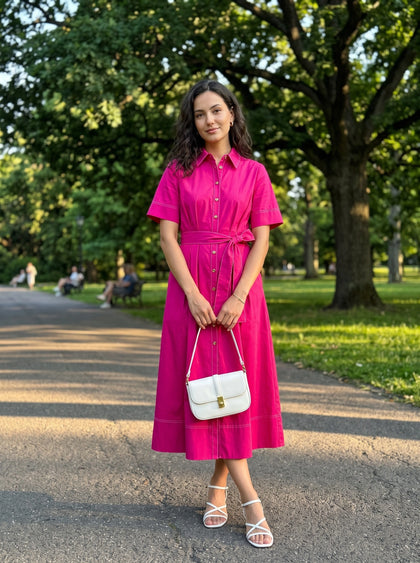
 Pink Shirt Dress — Belted Tie-Waist Midi View Product
Shop
 New Arrival View Product
Shop
 Zebra Print Ruched Midi Dress View Product
Shop
 Black Ruched Cut-Out Slit Maxi Dress View Product
Shop
 Ruby Red Halter Neck Flared Midi Dress View Product
Shop
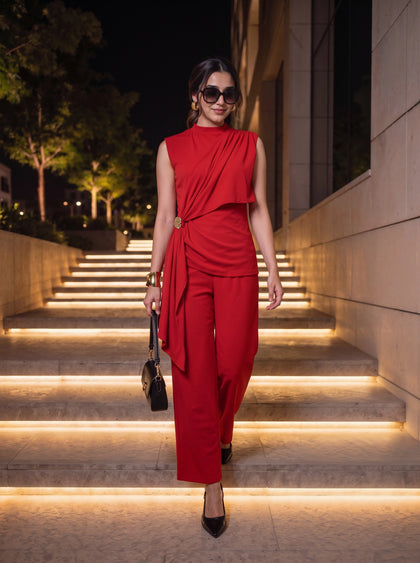
 Red Draped Sleeveless Co-ord Set View Product
Shop
 Tropical Leaf Print Tie-Up Wrap Skirt View Product
Shop
 Zebra Print Mini Skirt with Side Slit View Product
If you're reading this in August, you're actually early
Farewell season properly peaks between February and April, but freshers' parties are happening right now, and the outfit logic barely changes, apart from one thing: colour and intent. Farewell is about standing out, so jewel tones, metallics and richer shades work in your favour there. Freshers' is more about fitting in while still making a strong first impression, so softer pastels and cheerful prints tend to land better than anything too loud, too soon.
Practically, that means the co-ord set or dress you buy for your freshers' party this month can double up for farewell later in the year, especially if you choose a piece you can restyle with a different top, added jewellery or a changed hairstyle, rather than something so specific to one event that it only ever works once. Buy with both dates in mind, and you've solved two outfit decisions with a single purchase.
Making the budget actually work
Most of what a saree costs isn't the saree itself, it's everything built around it: the stitching, the alterations, the borrowed jewellery, sometimes even a parlour charge just for the draping. A co-ord set sidesteps almost all of that.
Here's what a realistic version looks like. Pick a skirt from the Under ₹999 collection, add a top around ₹1,199, and you're at roughly ₹2,100 for a complete two-piece outfit, with a third piece thrown in free. That's a full look, footwear and accessories aside, for less than a lot of girls end up spending on saree add-ons alone. And unlike a saree worn for exactly one function, a skirt or a co-ord top gets an actual second life at your next birthday, a friend's wedding function, or any other college event on the calendar. If you'd rather go slightly bigger on one statement piece, the Under ₹1999 collection gives you room to do that without breaking the same math.
Think cost per wear, not cost per day. A saree worn once, however beautiful it looked in the photos, will always lose that comparison to something you'll actually reach for four or five more times over the next year.
Quick answers to what you're actually wondering
Will I look underdressed if the rest of my class is in sarees?
Not if your outfit is festive in colour and finish. A flat, everyday-looking outfit will feel underdressed next to a saree. A well-put-together co-ord in a rich colour, styled with proper jewellery and heels, will not. People clock effort, not fabric.
What if my college basically has an unofficial saree-only culture?
Ask a senior, or scroll through last year's farewell photos on Instagram before you decide anything. Most colleges are more flexible than the panic in the group chat suggests, and a well-chosen Indo-western outfit tends to read as a deliberate choice, not a lack of effort.
Can I still look ethnic without wearing an actual saree?
Yes. Dhoti pants, a cape set, or a co-ord with a dupatta draped over one shoulder all carry that ethnic weight without any actual draping involved.
What shoes will actually survive the whole day?
Block heels or wedges, not stilettos. You'll be standing for photos, walking up to a stage, and dancing later, and stilettos are usually the reason someone ends up quietly wincing in every group photo by 9 pm.
How do I get my parents on board if they're expecting a saree?
Most of the resistance softens once they see the actual outfit instead of just hearing "I'm not wearing a saree." Show them the look, not just the decision.
Before you go
Farewell is one day, and it deserves an outfit you actually enjoy wearing, not one you spend the whole evening adjusting. If that's a saree for you, wear it well and have a genuinely good time in it. If it isn't, a co-ord set or an Indo-western look will get you the same reaction without the pallu anxiety, and you'll almost certainly wear it again before the year ends. Start with the Under ₹999 collection if you're building the look piece by piece, or head straight to the Under ₹1999 edit if you already know your statement piece. You've got time before farewell, and even less before your freshers' party, so there's no real reason to be scrambling the week of either one.
Found your look? Shop the EverMore edit.
Shop nowKeep reading
-
 Style guide
The Buy 2 Get 1 Free Formula: How to Turn 3 New Pieces Into 9 Outfits
Your cousin's sangeet is four days away and you are standing in front of a wardrobe that is, technically, full. Every hanger is...
-
 Style guide
Trendy vs Timeless: Which Pieces Are Actually Worth Buying on Repeat
Open Instagram on any given evening and within four scrolls you'll spot the same cherry red co-ord set on three different women...
-
 Style guide
Which Dress Colours Actually Suit Your Skin Tone: A Guide for Indian Women
Every Indian woman has some version of this memory. You're on a wedding shopping trip, standing in a shop with fifty shades of ...


